OpenAI Introduces Codex: A Cloud-Based Coding Agent
OpenAI has unveiled Codex, a cloud-based coding agent powered by the codex-1 model, designed to enhance software engineering workflows.
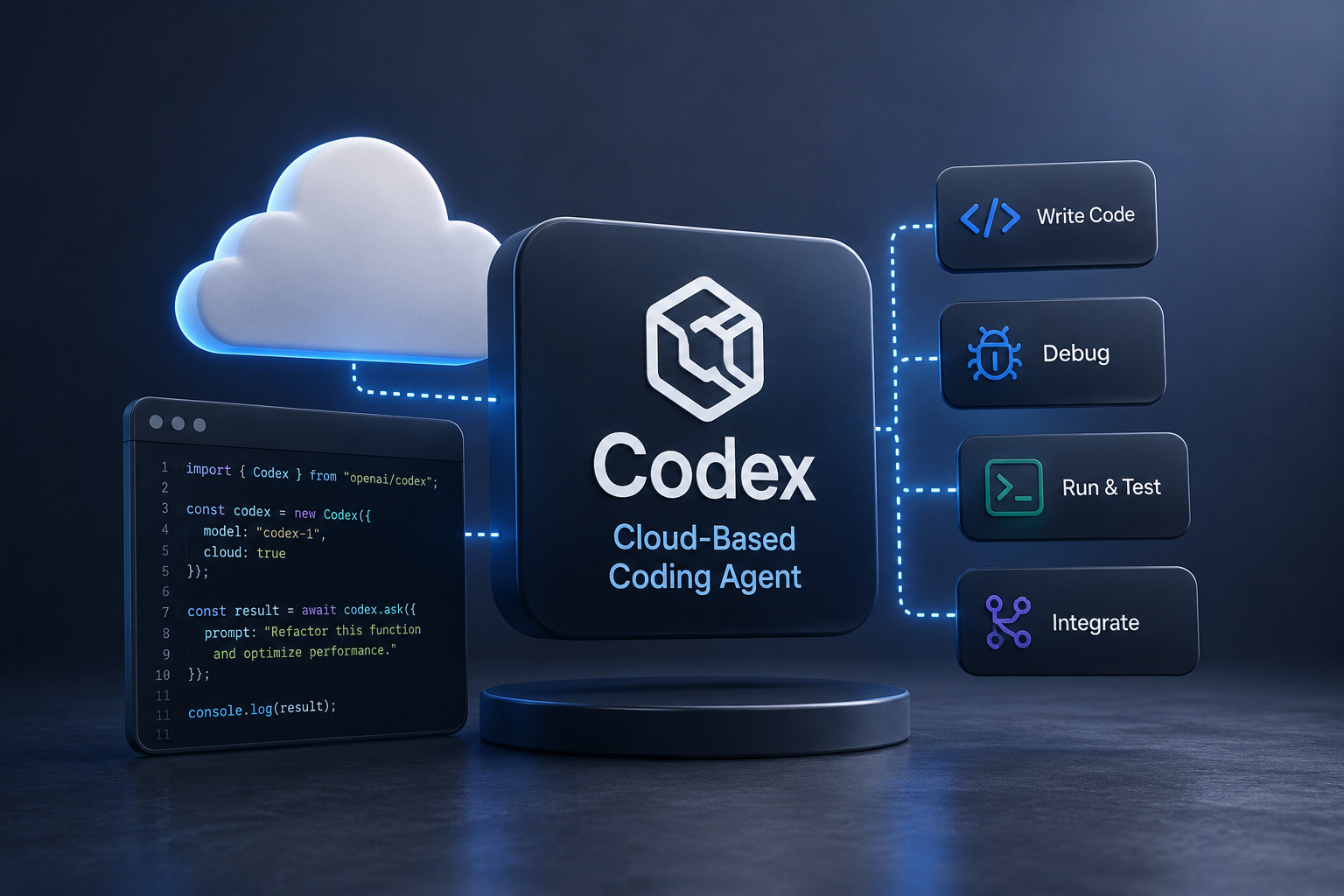
- Codex is a cloud-based coding agent developed by OpenAI.
- It is powered by codex-1, a version of the o3 model optimized for software engineering.
- The codex-1 model was trained using reinforcement learning on real-world coding tasks.
- Codex aims to mirror human coding styles and preferences.
- It can iteratively run tests to ensure passing results.
Overview of Codex
OpenAI has published an addendum to the o3 and o4-mini system card, introducing Codex, a new cloud-based coding agent. This development marks a significant step towards enhancing automated coding processes, particularly for software developers.
Codex functions as an advanced assistant, leveraging robust AI models to aid in various coding tasks.
The Codex-1 Model
Codex is powered by codex-1, a specialized version of the OpenAI o3 model. This version has been tailored specifically for software engineering applications, ensuring it meets the unique needs of developers.
The introduction of codex-1 highlights OpenAI's commitment to optimizing artificial intelligence for practical application in coding.
Training Methodology
The codex-1 model underwent rigorous training utilizing reinforcement learning techniques, focusing on real-world coding scenarios. This training approach allowed the model to refine its capabilities by tackling diverse environments in software development.
Importantly, reports indicate that codex-1 has been engineered to mirror human coding styles and pull request (PR) preferences, which is critical for seamless integration into existing developer workflows.
Iterative Testing Capabilities
One of the standout features of Codex is its ability to run tests iteratively. This means that codex-1 can execute a coding task multiple times, adjusting its output until it achieves passing results.
This capacity could significantly enhance the speed and reliability of software development processes, allowing developers to focus more on creative problem-solving rather than debugging.
Future Implications
As OpenAI continues to develop Codex, questions remain about the official pricing, availability, and access tiers for users looking to integrate this advanced system into their workflows.
Additionally, how codex-1 performs in comparison to standard o3 or o4-mini models on various software engineering benchmarks is yet to be detailed.
Frequently Asked Questions
Related Stories

OpenAI Unveils Always-On 'Dots' Agents in 20+ DevDay 2026 Teasers
During its live-streamed DevDay 2026 event, OpenAI teased over 20 product updates, headlined by new always-on personal AI agents named dots.

Google, OpenAI, and Anthropic Plan Joint AI Safety Standards Body, Reports Indicate
Google, OpenAI, and Anthropic are reportedly planning to establish the Standards Authority for Frontier AI without government oversight. The three tech giants aim to launch the joint self-regulatory body by late 2026 or early 2027.

Google Announces Gemini 4 Argon AI Model, But Access Remains Unavailable
Google has officially unveiled its new Gemini 4 Argon AI model, signaling a roadmap shift that appears to bypass Gemini 3.5 Pro. However, neither developers nor end users can access or test the model yet.