Rising Water Footprint of AI: Geographic Factors and Cooling Technologies
The water usage linked to artificial intelligence is on the rise, with geographic siting and cooling technology choices playing pivotal roles in its impact.
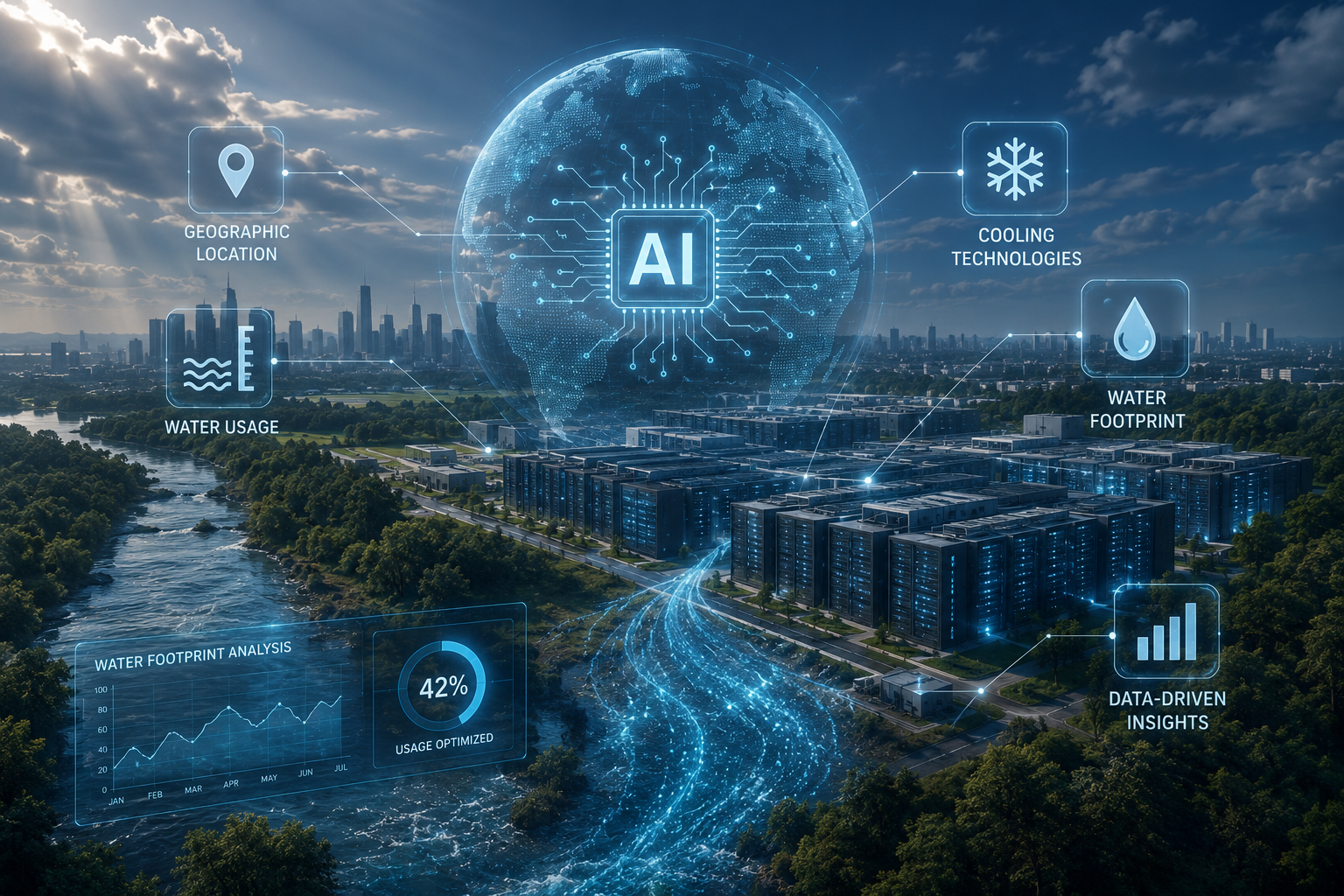
- AI's water footprint is currently increasing.
- Geographic location influences the severity of AI water usage impacts.
- Cooling technology selection can affect data center water consumption.
Understanding AI's Water Footprint
The water footprint of artificial intelligence (AI) is gaining attention as it continues to grow in significance. As AI infrastructure expands, so does its demand for water resources, which raises concerns about environmental sustainability.
The increase in water usage associated with AI is not uniform. Factors such as geographic location and the choice of cooling technologies play crucial roles in determining the overall environmental impact of AI data centers.
The Impact of Geographic Location
Geographic siting choices are fundamental in understanding the environmental implications of AI's growing water consumption. Different regions have varying water availability and ecological vulnerabilities, making the location of AI data centers a critical consideration.
Reports indicate that certain areas may be more ecologically sensitive to the expansion of these facilities, although detailed metrics regarding these impacts remain limited.
Cooling Technologies and Their Importance
The selection of cooling technologies directly affects the water consumption of data centers. Advanced cooling methods can potentially mitigate the environmental impact associated with AI infrastructure.
While systems with higher efficiency can significantly reduce water usage, the comparative effectiveness of specific technologies still needs to be verified. Understanding which cooling solutions offer the greatest reduction in water consumption is vital for sustainable AI practices.
Future Considerations
As AI continues to evolve and expand, addressing its water footprint will require ongoing scrutiny of the choices made in both infrastructure placement and technological innovations.
Further research is necessary to ascertain the total estimated volume of global water consumption attributed to AI and to identify particularly vulnerable geographic locales that may be at risk from data center expansion.
Frequently Asked Questions
Related Stories

Google Announces Gemini 4 Argon AI Model, But Access Remains Unavailable
Google has officially unveiled its new Gemini 4 Argon AI model, signaling a roadmap shift that appears to bypass Gemini 3.5 Pro. However, neither developers nor end users can access or test the model yet.

OpenAI Unveils Always-On 'Dots' Agents in 20+ DevDay 2026 Teasers
During its live-streamed DevDay 2026 event, OpenAI teased over 20 product updates, headlined by new always-on personal AI agents named dots.

Pentagon Seeks $30.3 Million Budget for AI-Powered Lie Detector 'Polygraph+'
The US Department of Defense has requested $30.3 million over five years to develop Polygraph+, an AI-powered lie detector initiative incorporating machine learning scoring and standoff sensing.